AURUM GUIDE · BRITISH GOLD COINS
Gold, history and British identity.
British gold coins can be understood on several levels at once: as precious metal, as legal-tender currency, as miniature works of art and, for collectable issues, as objects shaped by rarity, condition, mintage, provenance and cultural significance. This guide explains the stories behind some of the principal themes in the Aurum collection.
BRITISH ICONS
Britannia
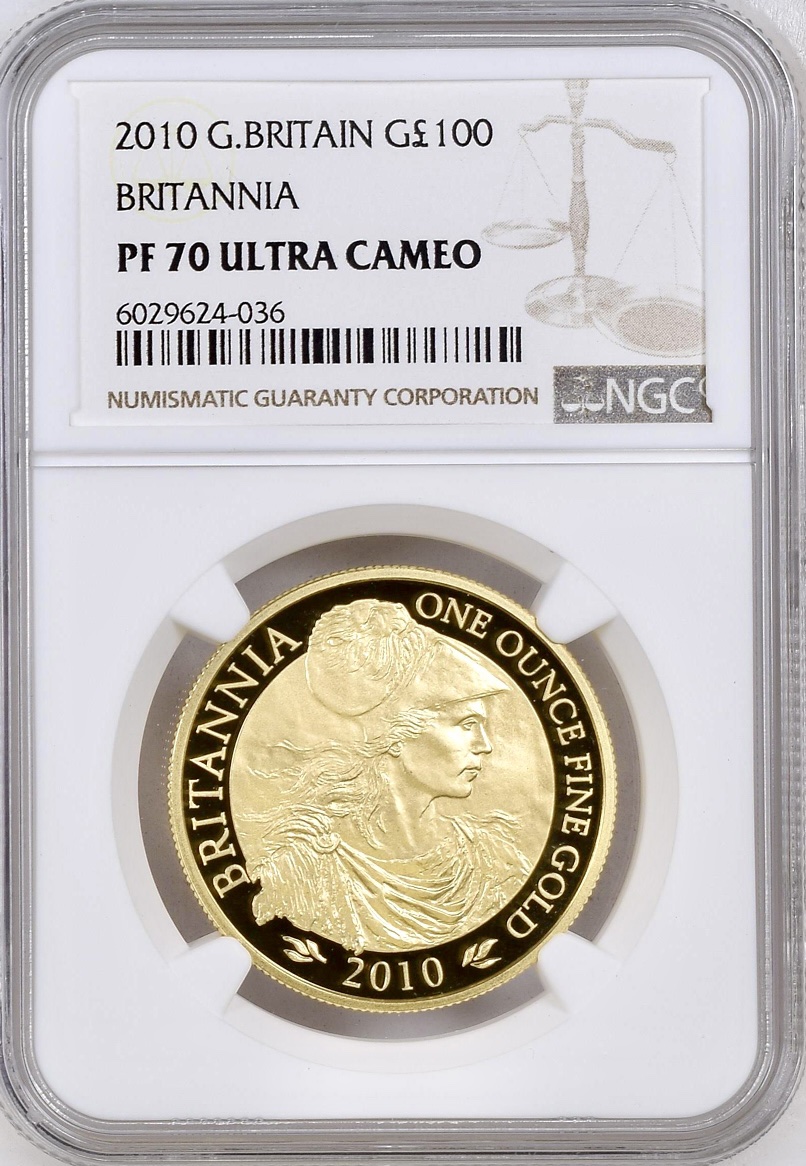
Britannia is one of the most enduring personifications of Britain. The figure has roots in the Roman representation of the province of Britannia and returned to British coinage in the seventeenth century. Across later coinage she developed into a national symbol associated with maritime strength, protection and identity.
The modern Gold Britannia was introduced by The Royal Mint in 1987. Philip Nathan's celebrated interpretation presents Britannia standing at the water's edge with trident and shield, accompanied by an olive branch. The combination is deliberate: strength and defence balanced by peace.
Legal tender and denomination
Britannia gold coins are denominated in pounds sterling. The standard one-ounce Britannia carries a £100 face value, although that denomination is not a statement of the coin's gold or collector-market value. HMRC specifically recognises Britannia gold coins as sterling currency for Capital Gains Tax purposes. VAT treatment follows the separate investment-gold rules.
Why collectors follow Britannia
Different dates, proof finishes, design variations, mintages and certified grades give Britannia a numismatic dimension beyond its underlying gold. Modern security features on later issues also demonstrate how a historic national symbol has continued to evolve through contemporary minting technology.
Britannia brings together precious metal, British national symbolism, legal-tender status and one of the most recognisable designs in modern British coinage.
ROYAL COINAGE
The Sovereign
The modern Sovereign was introduced in 1817 as part of Britain's major coinage reform after the Napoleonic Wars. Its name reaches much further back, to a large gold coin first issued under Henry VII in 1489, but the nineteenth-century Sovereign established the format that became recognised around the world.
Benedetto Pistrucci's St George and the Dragon design became inseparable from the Sovereign. The dynamic image of St George on horseback, defeating the dragon, turned a circulating gold coin into one of the defining designs of British numismatics. Over time the Sovereign travelled through Britain's international trading and imperial networks and was struck at several branch mints as well as in Britain.
Modern Sovereigns continue to connect collectors with this long history. Date, monarch, mint, condition, special designs and proof presentation can all distinguish one Sovereign from another. HMRC identifies Sovereigns minted in 1837 and later as sterling currency for Capital Gains Tax purposes.
The Sovereign is a direct link between modern collecting and more than two centuries of internationally recognised British gold coinage.

ROYAL HERITAGE
Royal Tudor Beasts
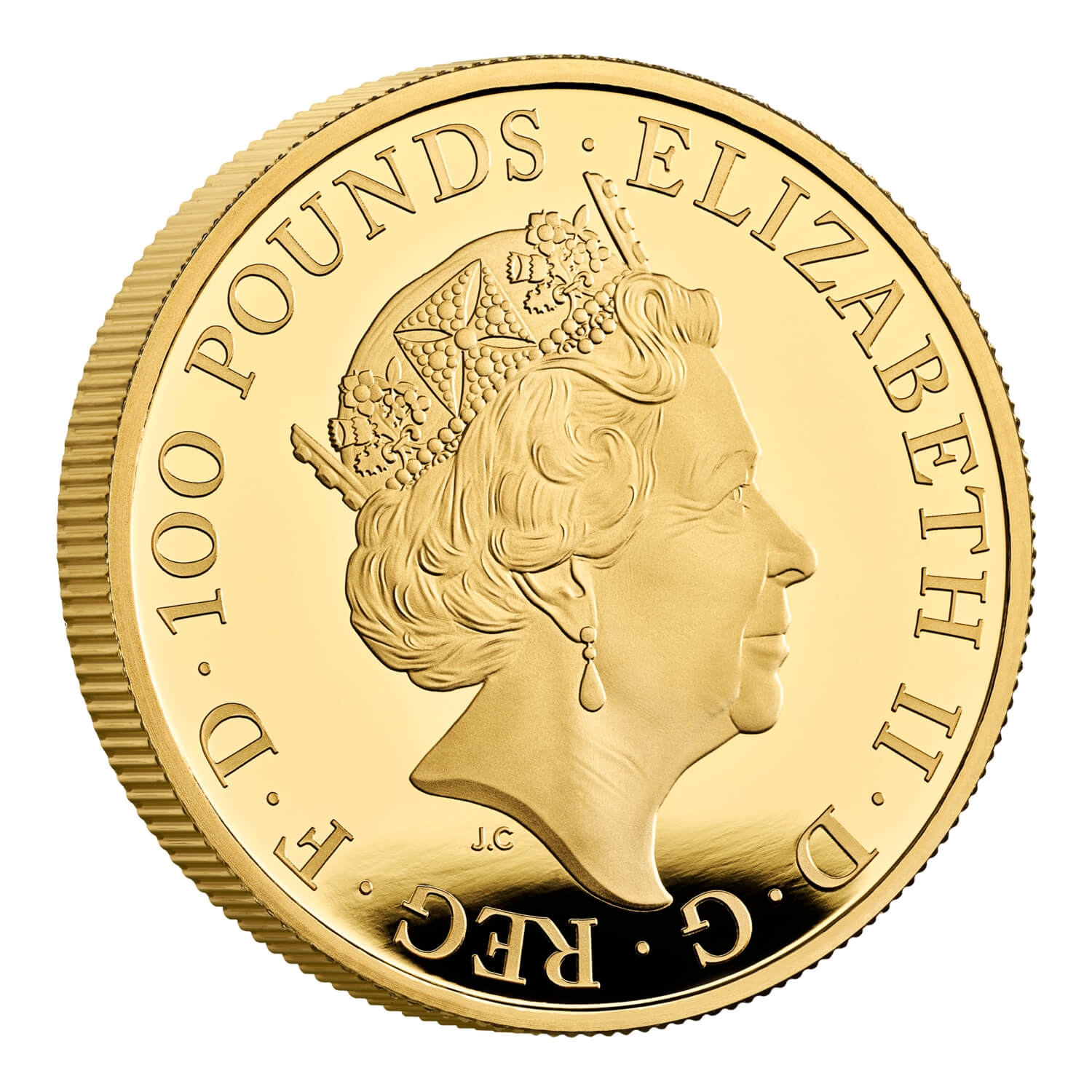
The Royal Tudor Beasts collection draws inspiration from the heraldic guardians associated with Hampton Court Palace. Heraldry was not merely decorative in Tudor England: it communicated ancestry, dynastic legitimacy, allegiance and royal authority. The modern coin series translates that visual language into contemporary British precious-metal coinage.
The Lion of England
The lion has been associated with English royalty for centuries and represents courage, strength and sovereignty. In the Tudor context, the beast also forms part of a carefully constructed dynastic story. The Royal Mint's modern Lion of England design by David Lawrence presents the heraldic animal as a powerful guardian, carrying the historical symbolism into a modern proof coin.
The 2022 two-ounce gold proof issue is struck in 999.9 fine gold and carries a £200 denomination. Its face value forms part of the coin's legal-tender identity and should not be confused with its precious-metal or collector-market value.
The Royal Tudor Beasts turn surviving royal heraldry into a coherent modern collecting series, connecting today's minting with the dynastic language of Tudor Britain.
GREAT ENGRAVERS
Modern Masterpieces
The Royal Mint's Great Engravers collection revisits historically important British coin designs using modern proof minting. The idea places the art of engraving itself at the centre of the coin, allowing celebrated works from Britain's numismatic past to be encountered again by modern collectors.
The Three Graces
William Wyon created the Three Graces during the great coinage competition of the early nineteenth century. Three classical female figures represent England, Scotland and Ireland, turning an ancient artistic subject into an allegory of the United Kingdom. The design was not adopted for general circulation and surviving original patterns became highly celebrated pieces of British numismatics.
Its modern revival gives collectors access to the design in a very different form: a large-format proof coin produced with contemporary minting techniques while retaining the historical composition that made Wyon's work famous.
Great Engravers celebrates coin design as art, connecting modern British proof coinage directly with engravers whose work helped define the visual language of British money.
BRITISH HISTORY
Commemorative Coins
British commemorative coins record people, anniversaries, places, institutions and cultural moments in a durable miniature form. For collectors, that creates a field considerably broader than traditional royal portraiture: architecture, literature, music, historic artworks and national events can all become part of Britain's modern numismatic record.
City Views: London
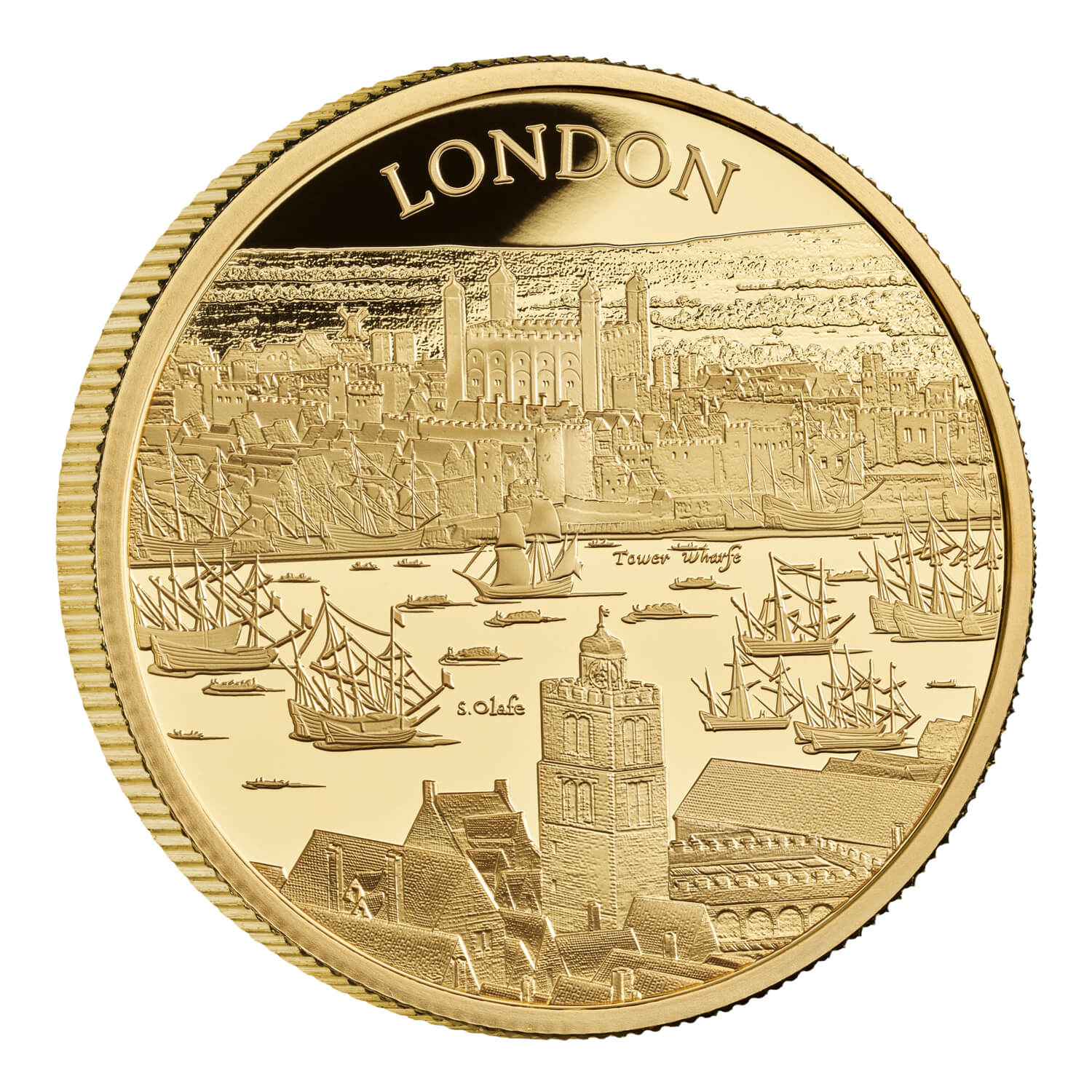
The City Views collection uses historic representations of great cities as the basis for modern coin designs. London was selected for the first release, drawing on a panoramic view associated with seventeenth-century artist Wenceslaus Hollar. The resulting coin is both a modern British gold issue and a miniature reinterpretation of an historic cityscape.
The design demonstrates one of the attractions of commemorative collecting: a coin can become an entry point into a much larger story. The collector is not simply acquiring gold, but a particular interpretation of a place, person or event preserved through coinage.
Commemorative coins turn Britain's history and culture into a changing numismatic record, giving collectors the opportunity to build a collection around subjects with personal or historical meaning.
BUILD YOUR COLLECTION
Discover the coins behind the stories.
Aurum's catalogue brings together selected British proof, graded and collectable gold coins. Availability varies, and individual coins can differ by grade, certification and presentation.